
Introduction to Dermal Filler Treatments
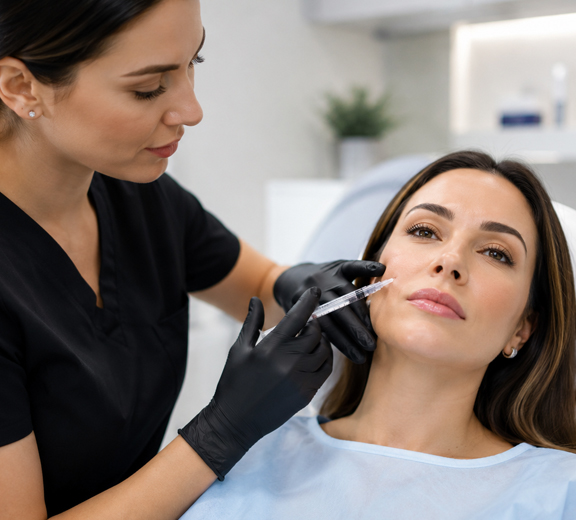
Dermal filler treatments are advanced non-surgical procedures designed to restore volume, enhance facial contours, and improve overall facial harmony. These treatments involve the injection of biocompatible substances, most commonly hyaluronic acid, into targeted areas of the face.
Unlike anti-wrinkle treatments, which relax muscles, dermal fillers work by adding structure and volume, making them ideal for shaping, lifting, and rejuvenating the face.
Dermal fillers are a core component of modern aesthetic medicine and, when performed correctly, deliver immediate and natural-looking results with minimal downtime.
Common Dermal Filler Pharmaceutical Brands
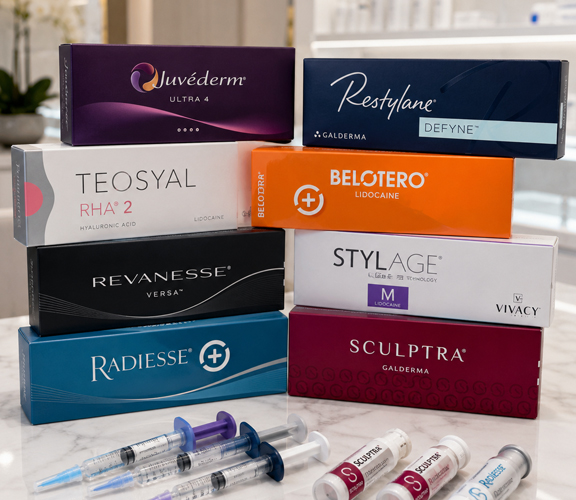
Globally recognised dermal filler brands include:
Restylane® (Galderma)
Teosyal® (Teoxane)
Belotero® (Merz)
Revanesse® (Prollenium)
Stylage® (Vivacy)
Radiesse® (Merz)
Sculptra® (Galderma)
Types of Dermal Filler Treatments (Foundation Level Focus)
At the beginner level, training focuses on safe, predictable, and low-risk procedures, primarily using hyaluronic acid fillers.
Volume Restoration
Replacing age-related volume loss with soft, natural facial rejuvenation.
Facial Contouring
Enhancing shape and definition, improving symmetry and proportions.
Line & Fold Correction
Softening static lines and folds for a refreshed appearance.
Treatment Types
Common Treatment Areas (Basic & Safer Zones)
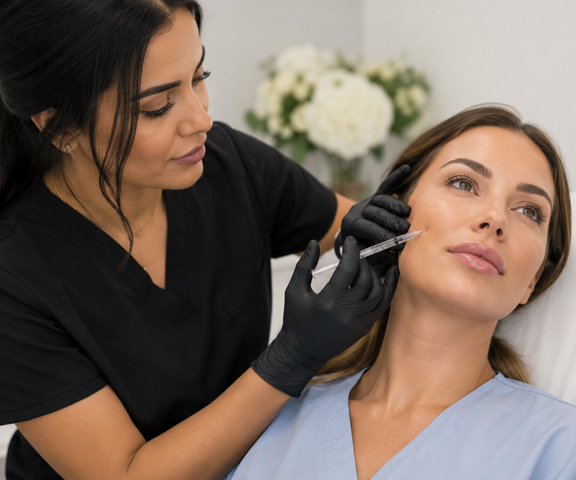
Treatment Areas
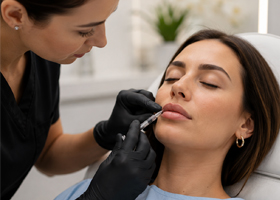
Lips (Lip Enhancement & Hydration)
- Adding subtle volume and definition
- Improving lip symmetry
- Enhancing hydration and smoothness
Nasolabial Folds (Smile Lines)
Lines running from the nose to the corners of the mouth. Softening deep folds for a more youthful appearance.
Marionette Lines
Lines extending from the corners of the mouth downward. Reduces a sad or tired appearance.
Cheeks (Basic Mid-Face Volume)
- Restoring mild volume loss
- Improving facial balance and contour
- Performed conservatively at beginner level
How Dermal Fillers Are Taught in Training
Our teaching approach is structured to build strong foundational skills with a heavy emphasis on safety and precision.
Day 1 – Theory & Demonstration
- Introduction to dermal fillers and product types
- Facial anatomy (vascular awareness for safety)
- Patient consultation and facial assessment
- Indications and contraindications
- Product selection and handling
- Injection techniques (needle basics)
- Depth, placement, and volume control
- Complication recognition and prevention
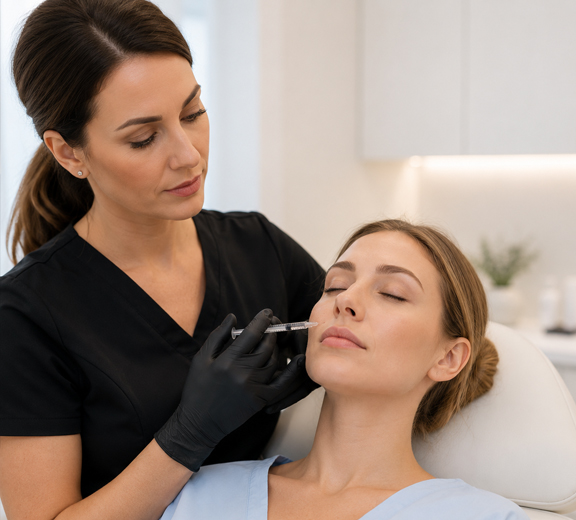
Live demonstrations will show lip filler techniques, nasolabial fold correction, and safe injection practices.
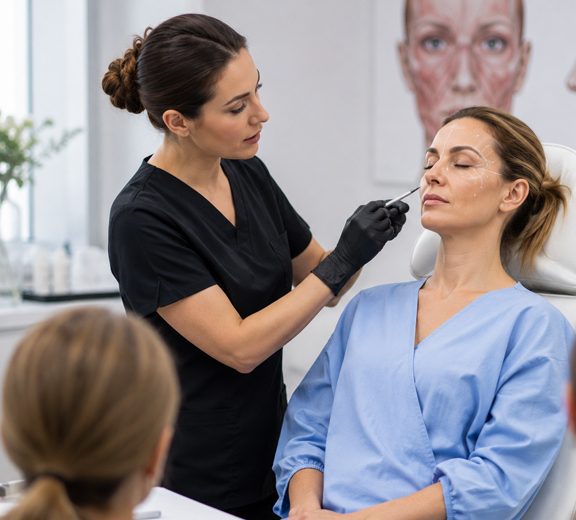
Day 1
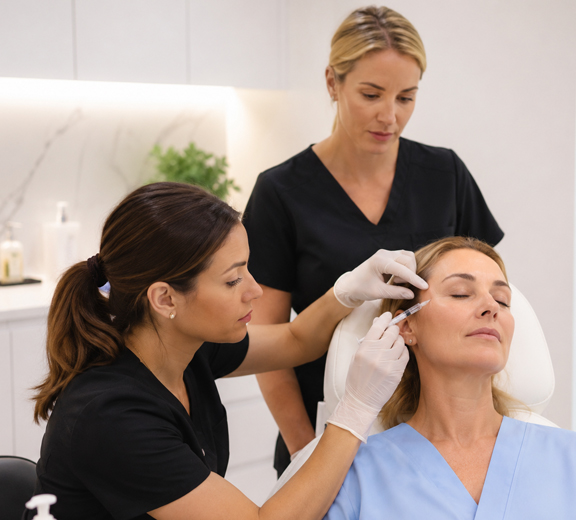
Day 2
Day 2 – Hands-On Practical Training
Participants will perform dermal filler treatments on live models, practicing:
- Lips
- Nasolabial folds
- Marionette lines
Under close supervision, learn:
- Injection angles and depth control
- Safe product placement
- Achieving natural-looking results
- Managing patient comfort and communication
Why We Focus on Safety
Safety is the cornerstone of aesthetic medicine—especially with dermal fillers. While dermal fillers are highly effective, improper technique can lead to complications, including vascular occlusion and tissue compromise.
- In-depth understanding of facial anatomy
- Identification of high-risk zones (even if not treated)
- Safe injection techniques and conservative approaches
- Use of appropriate product volumes
We strongly emphasise a “safety-first, aesthetics-second” philosophy.
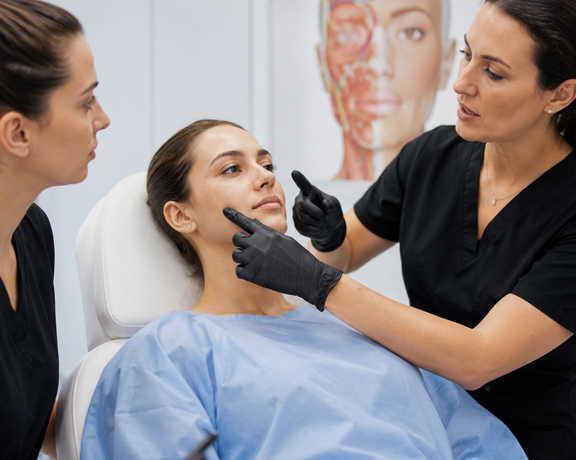
Safety
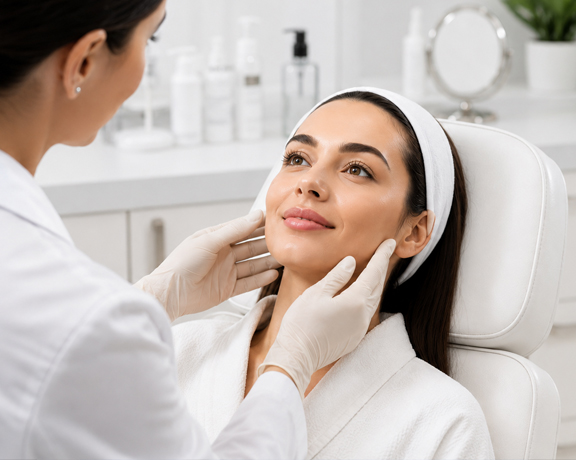
Patient Care
Adverse Reactions & Complication Management
- Bruising and swelling
- Asymmetry or overfilling
- Infection risks
- Early signs of vascular compromise
Basic emergency response principles and escalation pathways are covered.
Post-Treatment Care
- Managing swelling and bruising
- Avoiding pressure or massage (unless instructed)
- Recognising warning signs of complications
- Follow-up protocols and review timelines
Training Outcome
By the end of the dermal filler training, participants will be able to:
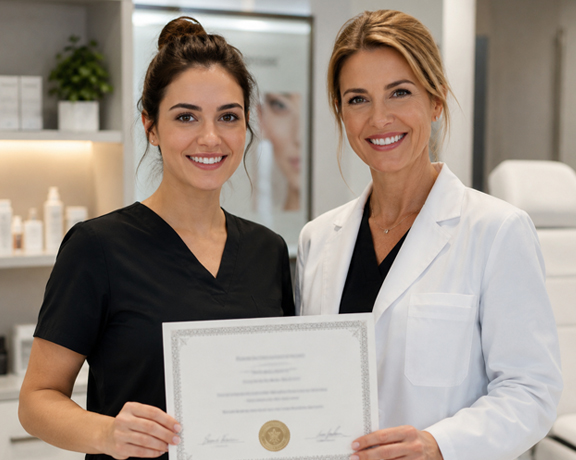
Outcomes